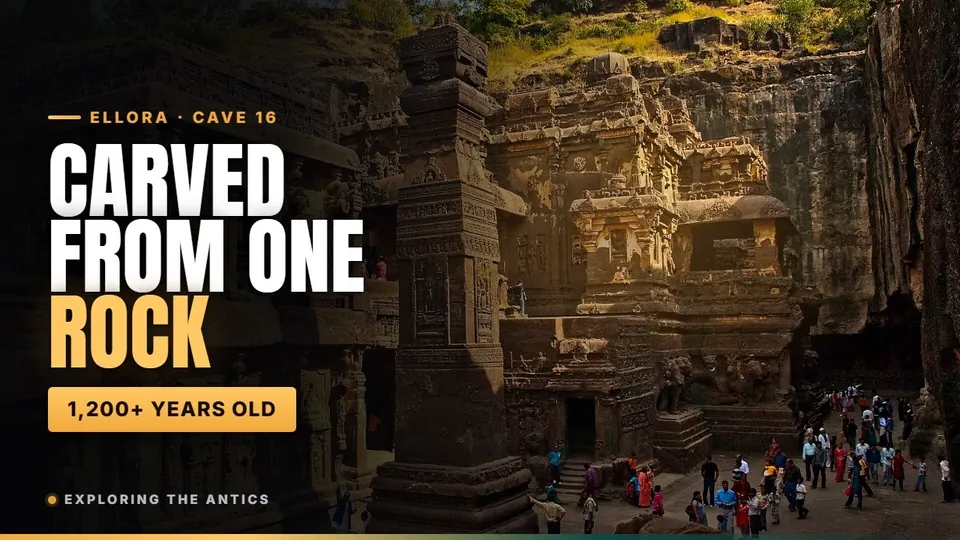
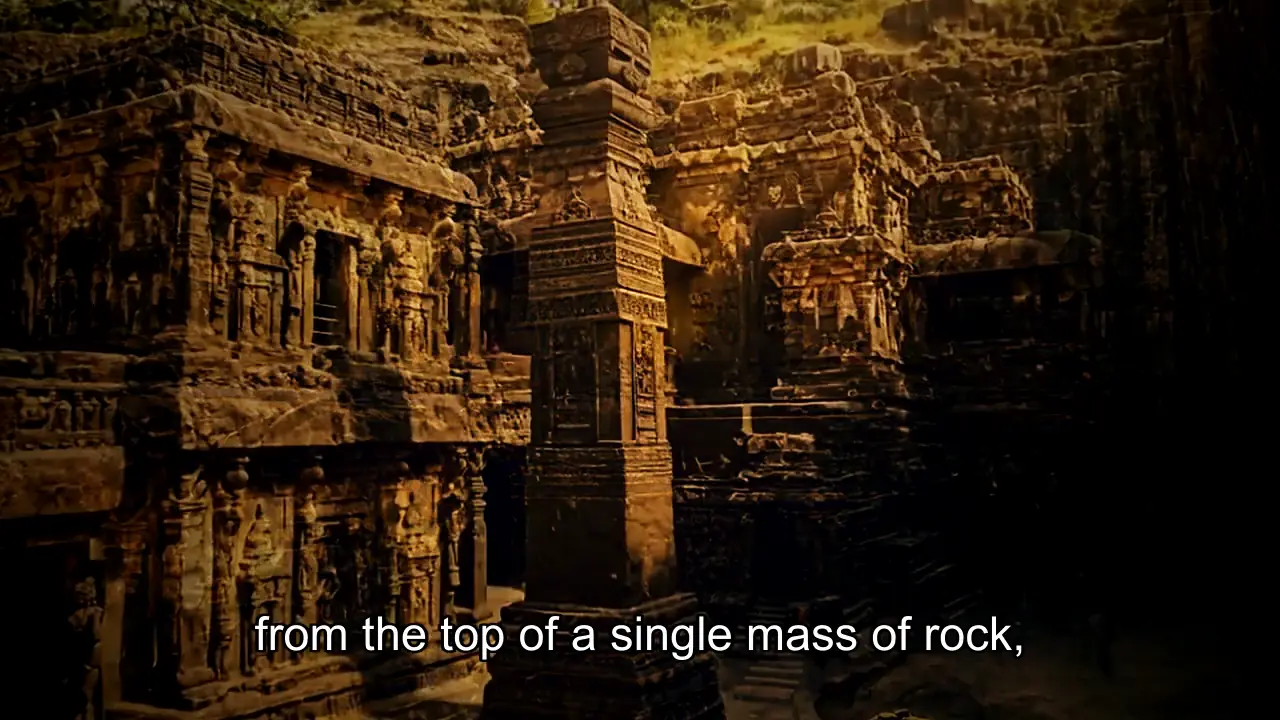
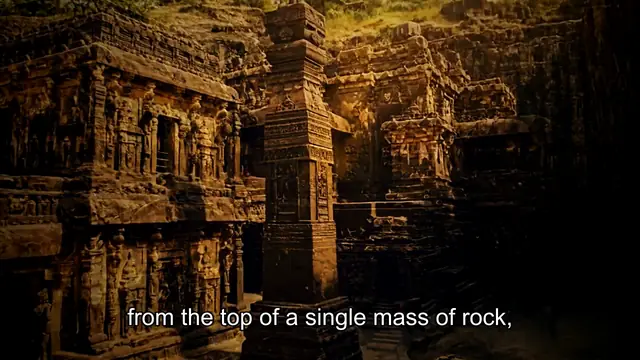
In western India stands a temple that was not built. It was carved. Carved downward, from the top of a single mass of rock, in one continuous piece. More than twelve hundred years later, people still stand before it in disbelief. Welcome to the Kailasa Temple.
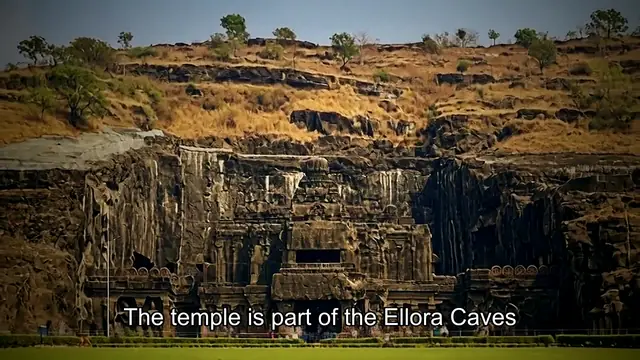
The temple is part of the Ellora Caves in Maharashtra, a chain of thirty four cave temples cut into a basalt cliff by Buddhists, Hindus, and Jains. Since nineteen eighty three, Ellora has been a UNESCO World Heritage Site. And its greatest wonder is Cave sixteen.
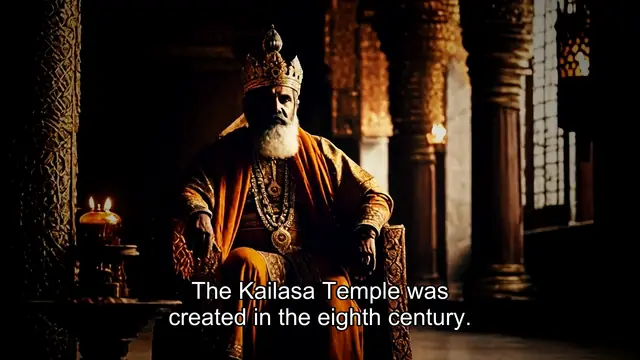
The Kailasa Temple was created in the eighth century. No inscription on the temple names its maker, but historians generally credit the Rashtrakuta king Krishna the First, who ruled from around seven fifty six to seven seventy three.
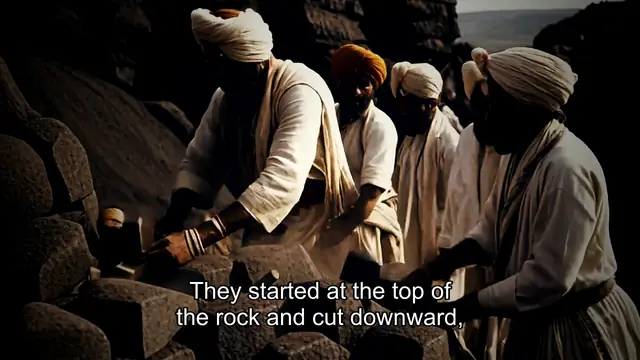
What makes it extraordinary is how it was made. The carvers did not stack stones. They started at the top of the rock and cut downward, removing, by common estimates, around two hundred thousand tonnes of stone, until a complete temple stood free inside the hillside.
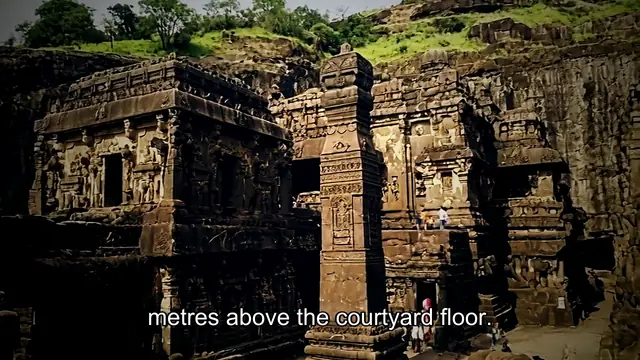
The scale is staggering. The main shrine rises more than thirty two metres above the courtyard floor. The courtyard around it is eighty two metres long and forty six metres wide, all hollowed out of solid rock.
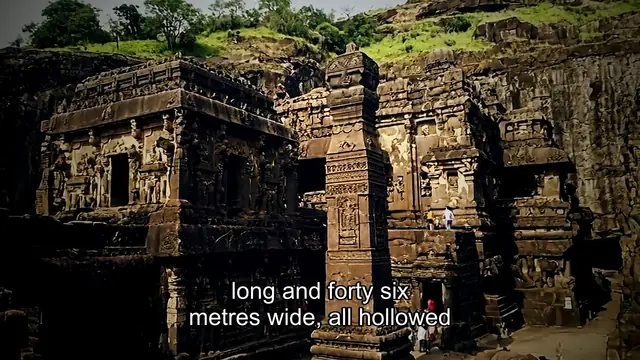
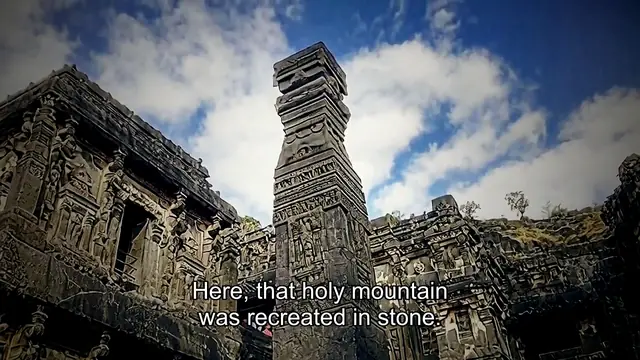
The temple is dedicated to Lord Shiva. Its name, Kailasa, comes from Mount Kailash, the sacred Himalayan mountain believed to be Shiva's home. Here, that holy mountain was recreated in stone.
A legend tells how it began. According to a text written in the fifteenth or sixteenth century, a king fell gravely ill. His queen prayed to Lord Shiva, and vowed that she would not eat until she could see the top of a temple built in his honour.
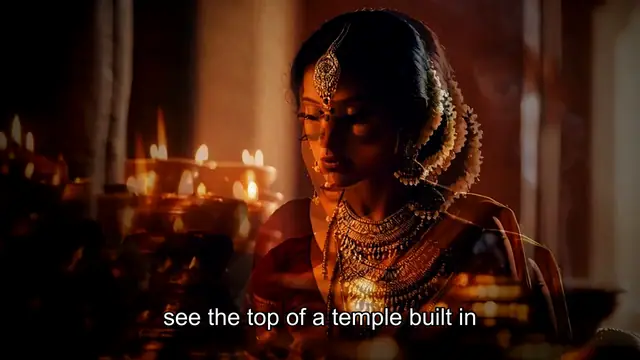
Builders told her it would take years. But an architect named Kokasa found a way. He began carving from the very top of the rock, and the legend says that within a week, the queen could see the temple's summit, and break her fast.
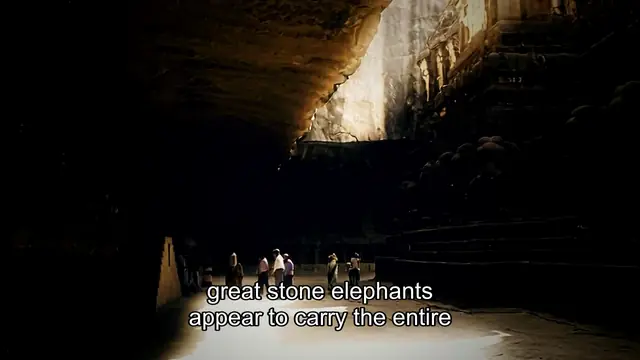
Around the base of the temple, rows of great stone elephants appear to carry the entire structure on their backs. Every elephant, every pillar, and every wall was carved from the same single rock.
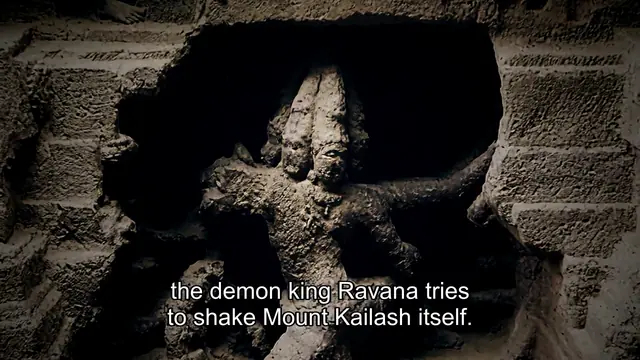
The walls are filled with stories. In one famous panel, the demon king Ravana tries to shake Mount Kailash itself. In the legend, Lord Shiva simply presses the mountain down with his toe, trapping Ravana beneath it.
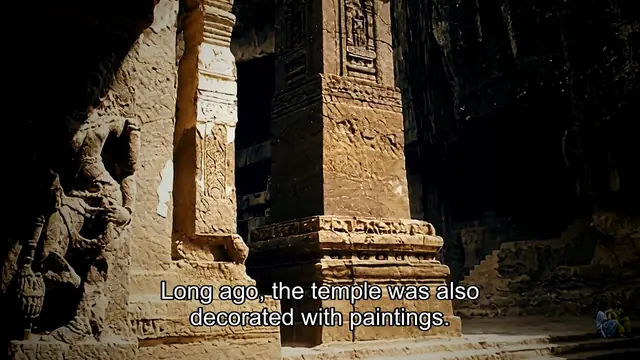
Long ago, the temple was also decorated with paintings. Today, only faint traces of them survive, hinting at how dazzling this place must once have looked.
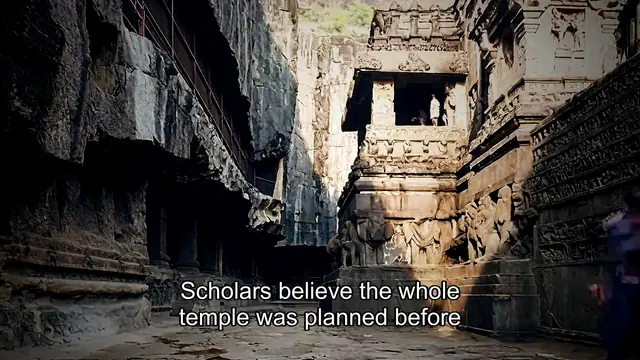
So how was it done? Scholars believe the whole temple was planned before the first cut was made, because in solid rock, a mistake cannot be undone. One archaeologist estimated that about two hundred and fifty workers could have completed it in around five and a half years. Even so, its precision remains astonishing.
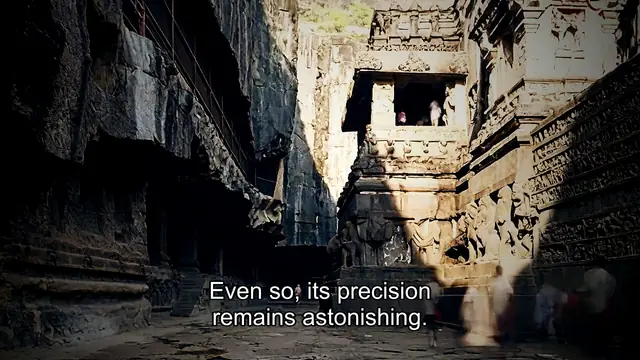
A temple carved from the top down, out of one single rock.