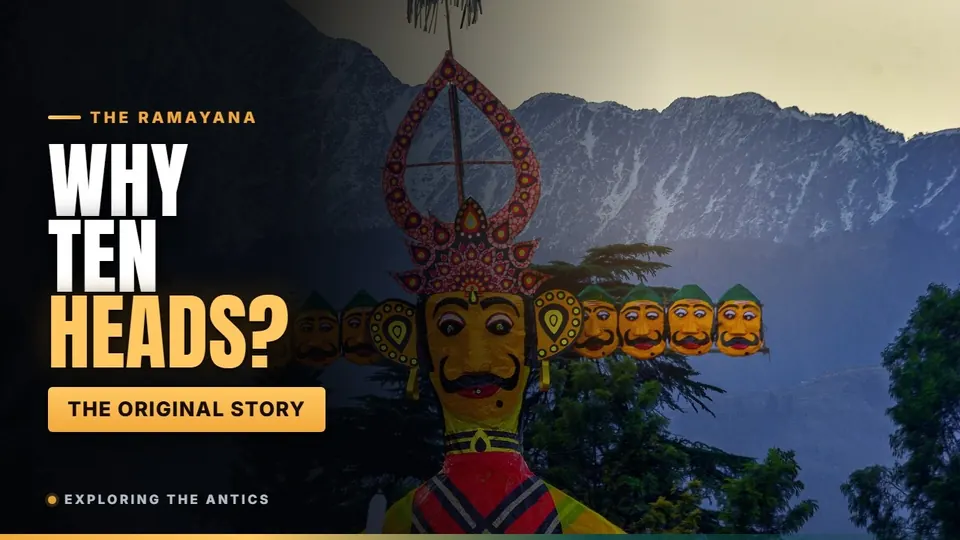
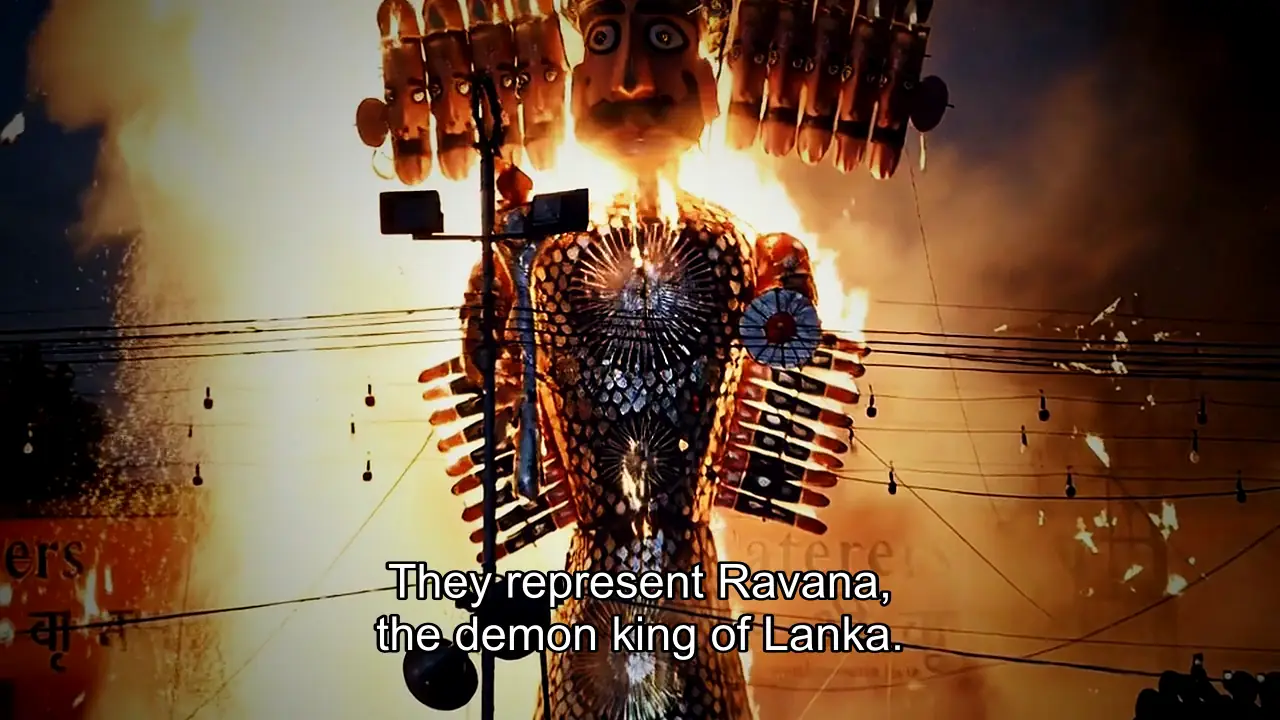
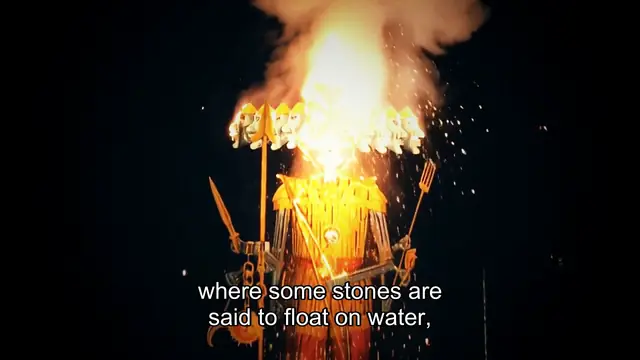
Every year, on the festival of Dussehra, giant effigies with ten heads go up in flames across India. They represent Ravana, the demon king of Lanka. But why does Ravana have ten heads? The answer lies in the oldest version of his story.
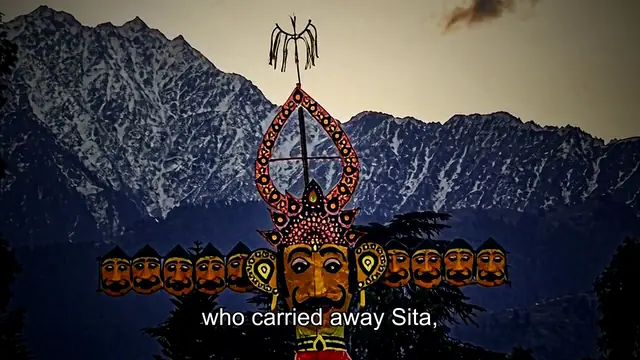
Ravana is the great antagonist of the Ramayana. He was the mighty king of Lanka, who carried away Sita, and who was finally defeated by Lord Rama. And he is almost always shown with ten heads.

The Uttara Kanda of the Valmiki Ramayana tells of his birth. His father was the sage Vishravas, and his mother was Kaikasi, the daughter of a rakshasa. The text says that the child was born with ten necks, so his father named him Dashagriva, the ten necked one.
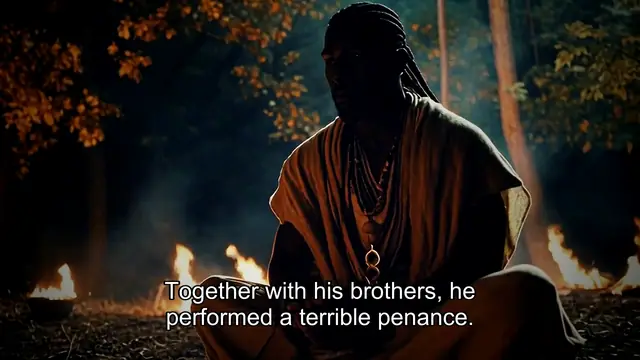
As a young man, Dashagriva set out to gain great power. Together with his brothers, he performed a terrible penance. According to the text, he went without food, and every thousand years, he cut off one of his heads and offered it into the sacred fire.

After nine thousand years, nine of his heads had been offered. As he raised his sword to cut off the tenth, Lord Brahma, the creator, appeared before him, pleased with his devotion, and offered him a boon.
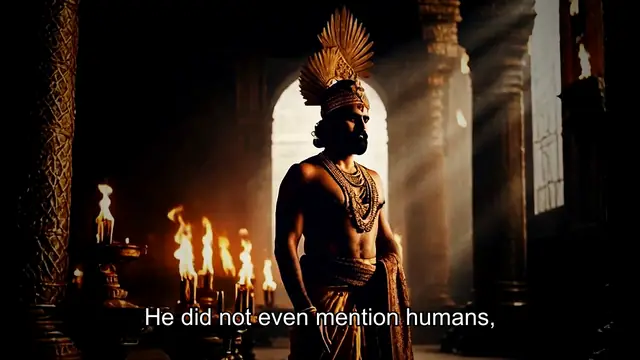
Ravana asked never to die. Brahma refused. So instead he asked that no god, demon, serpent, or spirit could ever kill him. He did not even mention humans, because he considered them as weak as straw. Brahma granted the boon, and his lost heads grew back.
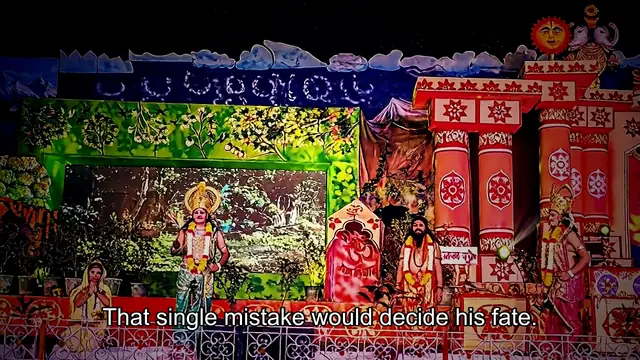
That single mistake would decide his fate. Because Ravana could not be killed by gods, Lord Vishnu was born on earth as a human, as Rama, the prince of Ayodhya.
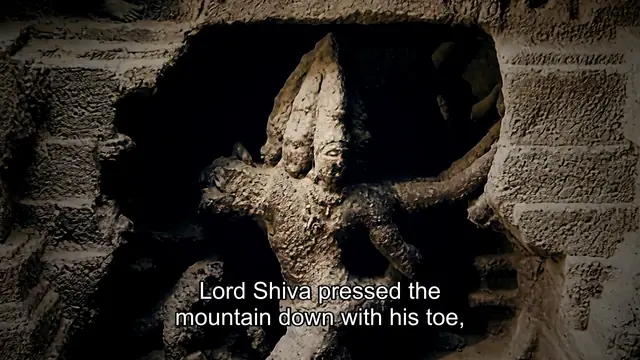
The Uttara Kanda also explains his name. When Dashagriva tried to lift Mount Kailash, Lord Shiva pressed the mountain down with his toe, trapping his arms beneath it. Ravana let out a roar so terrible that the three worlds trembled. Shiva then named him Ravana, the one who roared.
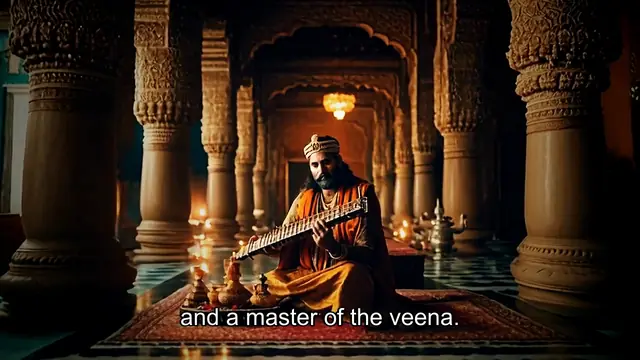
Yet Ravana was not only a warrior. He is remembered as a great scholar, said to know the four Vedas and the six shastras, and a master of the veena. Tradition even credits him with the famous hymn to Shiva, the Shiva Tandava Stotram.
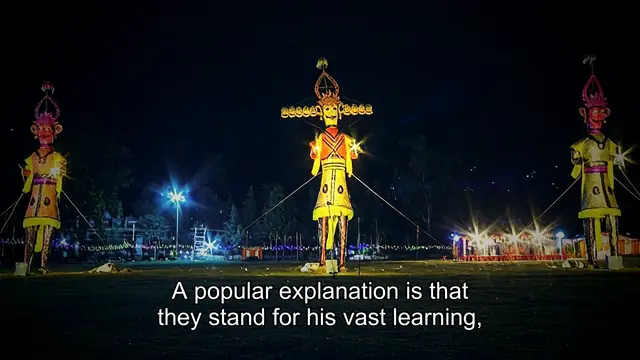
Over the centuries, people have also found deeper meanings in his ten heads. A popular explanation is that they stand for his vast learning, the four Vedas and the six shastras, all held in one mind.
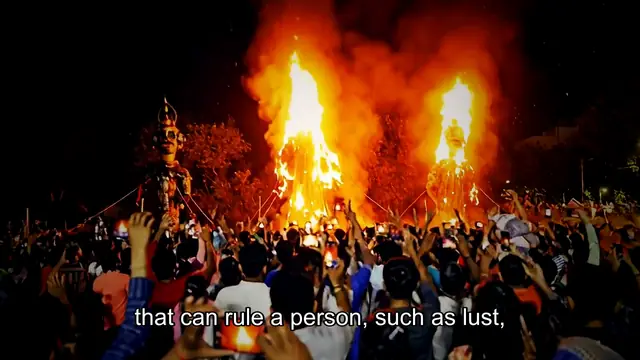
Others see the ten heads as the passions that can rule a person, such as lust, anger, greed, pride, and jealousy. When Ravana's effigy burns at Dussehra, many say it is a reminder to burn those passions within ourselves.
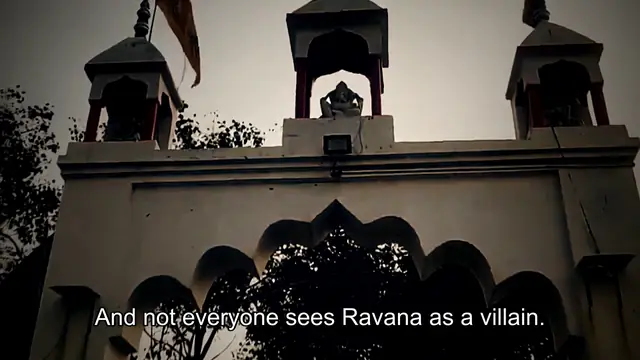
And not everyone sees Ravana as a villain. In parts of India, he is honoured. At Bisrakh in Uttar Pradesh, which locals believe is his birthplace, there is a temple to him, and in Kanpur, a Ravana temple opens only once a year, on Dussehra.
A demon, a devotee, or a scholar?